
Burst Pipe Repair in Anchorage: Why Splits Happen Fast

Contact Us Today

A frozen pipe rarely bursts where the ice actually sits. Instead, pressure builds downstream and the pipe fails somewhere else entirely, often catching homeowners completely off guard. Understanding this physics is the first step toward smart burst pipe repair in Anchorage before winter's coldest months arrive.


October marks the transition into serious freeze territory across the area. Temperatures drop fast, ground moisture starts locking up, and older plumbing systems begin showing stress. Knowing what causes a burst pipe, and how quickly to respond, can mean the difference between a minor repair and a flooded basement.

How a Frozen Pipe Actually Splits

Ice forming inside a pipe doesn't just block water flow. It expands like a piston, shoving the trapped liquid further down the line. If that water hits a closed faucet or valve, pressure has nowhere to go.


That trapped pressure searches for the weakest point in the system. Often, that point is several feet away from where the ice originally formed. This is why a simple "no water" complaint at one faucet can escalate into major water damage once thawing begins.

A few warning signs suggest you're heading toward this scenario:

  • Noticeably reduced water pressure at a single fixture
  • A faucet that produces only a trickle or nothing at all
  • Unusual gurgling noises when running water elsewhere in the house
  • Cold spots along exposed pipe sections in a garage or crawlspace


If you notice any of these, don't wait. Calling for professional help right away, before the ice fully thaws, gives technicians a chance to intervene safely.

Why Fast Action Prevents Catastrophic Damage

Once a frozen section starts to thaw, pressure that built up during the freeze gets released all at once. If a split has already formed, that release turns into a flood inside walls, ceilings, or crawlspaces. The damage often isn't discovered until water is already pooling somewhere unexpected.


Leaving a faucet slightly open to drip can relieve built-up pressure and buy you time. It's a simple trick, but it genuinely reduces the chance of a violent rupture while you wait for help.


Professional steam thawing is the safer long-term solution. Rather than guessing at where a blockage sits, trained technicians use controlled heat to melt ice from the inside without stressing already-strained pipe walls. Combined with prompt emergency drain service, this approach addresses the frozen section and reduces the risk of a hidden rupture forming somewhere down the line.

What to Do the Moment You Suspect a Frozen or Burst Line

Acting quickly matters more than acting perfectly.

Here's a practical sequence homeowners in the area should follow:

  1. Shut off the main water valve if you suspect an active leak or burst.
  2. Open the affected faucet slightly to relieve pressure inside the line.
  3. Locate the general area of concern (garage, crawlspace, exterior wall).
  4. Call for professional burst pipe repair services rather than attempting a DIY thaw with an open flame or excessive heat.
  5. Keep the area clear so technicians can access the pipe quickly once they arrive.


Trying to speed-thaw a pipe with a torch or space heater sounds efficient but often makes things worse. Uneven heating can crack already-weakened pipe walls, turning a slow leak into a sudden burst.

Why Local Expertise Matters More Than a Quick Fix

Anchorage's plumbing challenges aren't the same as those faced in milder climates. Sub-zero snaps, permafrost-affected soil, and repeated freeze-thaw cycles put unusual stress on both interior and buried pipe systems. A technician unfamiliar with these regional conditions may misdiagnose where the actual failure point is hiding.


That's part of why customers consistently point to fast, dependable response as one of the biggest reasons they call on local help during a crisis. When a mainline blockage or burst pipe strikes during off-hours, having a team that answers immediately and shows up prepared makes an enormous difference. Reliable, fairly priced emergency work isn't a luxury here, it's a necessity during freeze season.


ASAP Sewer and Drain, Inc tackles the toughest plumbing problems. That includes the tricky, hard-to-diagnose freeze-related failures common across the region, the kind other companies often struggle with. Technicians here understand the piston effect behind frozen pipe bursts. That knowledge helps them pinpoint the real problem area faster, saving homeowners from unnecessary wall or floor damage.

Protecting Your Pipes Before the Deep Freeze Sets In

Prevention still beats emergency repair every time.

A few habits can meaningfully reduce your risk heading into the coldest stretch of the year:

  • Insulate exposed pipes in garages, crawlspaces, and exterior walls
  • Keep a consistent indoor temperature, even when away from home
  • Let faucets drip slightly during extreme cold snaps
  • Disconnect and drain exterior hoses before the ground fully freezes
  • Schedule a plumbing check before the hardest freeze hits if you've had frozen pipe issues before


None of these steps guarantee a freeze-free winter, but together they lower your odds significantly. When something goes wrong, prompt professional response matters most. It puts you in a stronger position than homeowners who wait until water pools on the floor.

Frequently Asked Questions

  • Does a pipe always burst at the spot where it froze?

    No. The ice block itself rarely causes the rupture. Pressure builds from trapped water downstream, and the pipe typically fails at its weakest point, which can be several feet from the actual ice.

  • Is it safe to thaw a frozen pipe myself?

    Applying gentle, even heat near an accessible section can sometimes help, but open flames or excessive heat risk cracking the pipe further. Professional steam thawing is safer and far more precise.

  • What should I do first if I suspect a burst pipe?

    Shut off your main water valve immediately, then open the affected faucet slightly to relieve pressure. Call for professional help right away rather than waiting to see if it resolves on its own.

  • Can leaving a faucet dripping really prevent a burst?

    Yes. A small, steady drip relieves the pressure buildup caused by expanding ice, reducing the chance of a violent rupture while the line is frozen.

If you're noticing reduced water flow or suspect a frozen section somewhere in your home, don't wait for it to turn into a flood. Reach out to ASAP Sewer and Drain, Inc for fast, dependable emergency service before the deep freeze sets in.
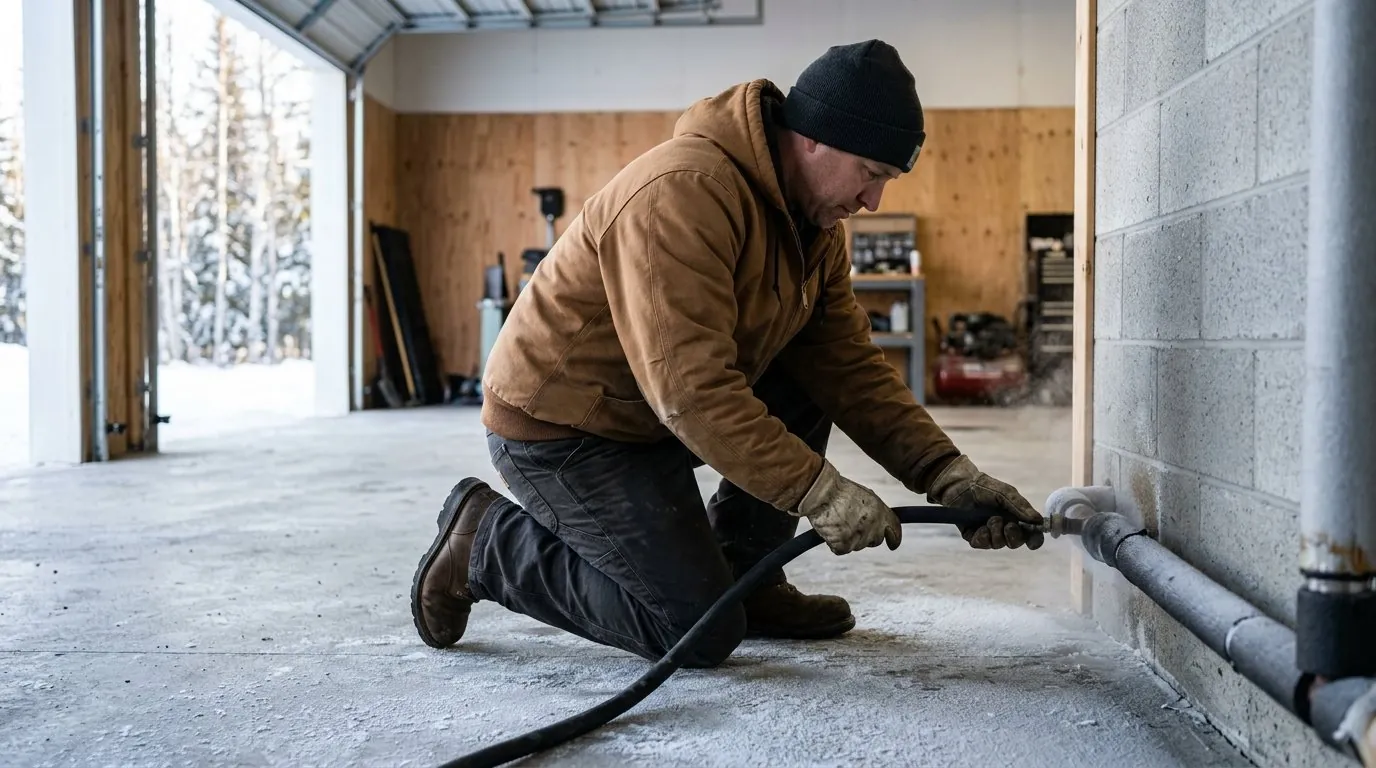
A plumber in a work jacket and knit hat kneels on the concrete floor of an open garage, connecting a black hose to a water line along a cinder-block wall, with snow-covered trees visible through the open door behind him.

Inquire with Us

Contact Us

Share this Article

Our Recent Blog Articles

sewer camera inspection
September 11, 2026
A sewer camera inspection can catch hidden pipe damage before Anchorage's brutal winter arrives. Learn the warning signs and why fall is the right time to act.
hydro jetting Anchorage
August 12, 2026
Discover why hydro jetting in Anchorage outperforms drain snaking for cold-weather grease clogs. Learn how Alaska's climate makes FOG buildup worse.
sewer camera inspection Anchorage AK
July 3, 2026
Anchorage's brutal freeze-thaw cycle quietly destroys underground sewer lines every year. Learn the warning signs of frost heave damage, frozen drains, and grease blockages, and find out how a sewer camera inspection can protect your home before disaster strikes.
More Posts
See all Blog Articles
WARNING: PUMP SEPTIC TANK BEFORE WINTER
×

Burst Pipe Repair in Anchorage: Why Splits Happen Fast


Contact Us Today

A frozen pipe rarely bursts where the ice actually sits. Instead, pressure builds downstream and the pipe fails somewhere else entirely, often catching homeowners completely off guard. Understanding this physics is the first step toward smart burst pipe repair in Anchorage before winter's coldest months arrive.


October marks the transition into serious freeze territory across the area. Temperatures drop fast, ground moisture starts locking up, and older plumbing systems begin showing stress. Knowing what causes a burst pipe, and how quickly to respond, can mean the difference between a minor repair and a flooded basement.

How a Frozen Pipe Actually Splits

Ice forming inside a pipe doesn't just block water flow. It expands like a piston, shoving the trapped liquid further down the line. If that water hits a closed faucet or valve, pressure has nowhere to go.


That trapped pressure searches for the weakest point in the system. Often, that point is several feet away from where the ice originally formed. This is why a simple "no water" complaint at one faucet can escalate into major water damage once thawing begins.

A few warning signs suggest you're heading toward this scenario:

  • Noticeably reduced water pressure at a single fixture
  • A faucet that produces only a trickle or nothing at all
  • Unusual gurgling noises when running water elsewhere in the house
  • Cold spots along exposed pipe sections in a garage or crawlspace


If you notice any of these, don't wait. Calling for professional help right away, before the ice fully thaws, gives technicians a chance to intervene safely.

Why Fast Action Prevents Catastrophic Damage

Once a frozen section starts to thaw, pressure that built up during the freeze gets released all at once. If a split has already formed, that release turns into a flood inside walls, ceilings, or crawlspaces. The damage often isn't discovered until water is already pooling somewhere unexpected.


Leaving a faucet slightly open to drip can relieve built-up pressure and buy you time. It's a simple trick, but it genuinely reduces the chance of a violent rupture while you wait for help.


Professional steam thawing is the safer long-term solution. Rather than guessing at where a blockage sits, trained technicians use controlled heat to melt ice from the inside without stressing already-strained pipe walls. Combined with prompt emergency drain service, this approach addresses the frozen section and reduces the risk of a hidden rupture forming somewhere down the line.

What to Do the Moment You Suspect a Frozen or Burst Line

Acting quickly matters more than acting perfectly.

Here's a practical sequence homeowners in the area should follow:

  1. Shut off the main water valve if you suspect an active leak or burst.
  2. Open the affected faucet slightly to relieve pressure inside the line.
  3. Locate the general area of concern (garage, crawlspace, exterior wall).
  4. Call for professional burst pipe repair services rather than attempting a DIY thaw with an open flame or excessive heat.
  5. Keep the area clear so technicians can access the pipe quickly once they arrive.


Trying to speed-thaw a pipe with a torch or space heater sounds efficient but often makes things worse. Uneven heating can crack already-weakened pipe walls, turning a slow leak into a sudden burst.

Why Local Expertise Matters More Than a Quick Fix

Anchorage's plumbing challenges aren't the same as those faced in milder climates. Sub-zero snaps, permafrost-affected soil, and repeated freeze-thaw cycles put unusual stress on both interior and buried pipe systems. A technician unfamiliar with these regional conditions may misdiagnose where the actual failure point is hiding.


That's part of why customers consistently point to fast, dependable response as one of the biggest reasons they call on local help during a crisis. When a mainline blockage or burst pipe strikes during off-hours, having a team that answers immediately and shows up prepared makes an enormous difference. Reliable, fairly priced emergency work isn't a luxury here, it's a necessity during freeze season.


ASAP Sewer and Drain, Inc tackles the toughest plumbing problems. That includes the tricky, hard-to-diagnose freeze-related failures common across the region, the kind other companies often struggle with. Technicians here understand the piston effect behind frozen pipe bursts. That knowledge helps them pinpoint the real problem area faster, saving homeowners from unnecessary wall or floor damage.

Protecting Your Pipes Before the Deep Freeze Sets In

Prevention still beats emergency repair every time.

A few habits can meaningfully reduce your risk heading into the coldest stretch of the year:

  • Insulate exposed pipes in garages, crawlspaces, and exterior walls
  • Keep a consistent indoor temperature, even when away from home
  • Let faucets drip slightly during extreme cold snaps
  • Disconnect and drain exterior hoses before the ground fully freezes
  • Schedule a plumbing check before the hardest freeze hits if you've had frozen pipe issues before


None of these steps guarantee a freeze-free winter, but together they lower your odds significantly. When something goes wrong, prompt professional response matters most. It puts you in a stronger position than homeowners who wait until water pools on the floor.

Frequently Asked Questions

  • Does a pipe always burst at the spot where it froze?

    No. The ice block itself rarely causes the rupture. Pressure builds from trapped water downstream, and the pipe typically fails at its weakest point, which can be several feet from the actual ice.

  • Is it safe to thaw a frozen pipe myself?

    Applying gentle, even heat near an accessible section can sometimes help, but open flames or excessive heat risk cracking the pipe further. Professional steam thawing is safer and far more precise.

  • What should I do first if I suspect a burst pipe?

    Shut off your main water valve immediately, then open the affected faucet slightly to relieve pressure. Call for professional help right away rather than waiting to see if it resolves on its own.

  • Can leaving a faucet dripping really prevent a burst?

    Yes. A small, steady drip relieves the pressure buildup caused by expanding ice, reducing the chance of a violent rupture while the line is frozen.

If you're noticing reduced water flow or suspect a frozen section somewhere in your home, don't wait for it to turn into a flood. Reach out to ASAP Sewer and Drain, Inc for fast, dependable emergency service before the deep freeze sets in.

A plumber in a work jacket and knit hat kneels on the concrete floor of an open garage, connecting a black hose to a water line along a cinder-block wall, with snow-covered trees visible through the open door behind him.

Inquire with Us

Contact Us

Share this Article

Our Recent Blog Articles

sewer camera inspection
September 11, 2026
A sewer camera inspection can catch hidden pipe damage before Anchorage's brutal winter arrives. Learn the warning signs and why fall is the right time to act.
hydro jetting Anchorage
August 12, 2026
Discover why hydro jetting in Anchorage outperforms drain snaking for cold-weather grease clogs. Learn how Alaska's climate makes FOG buildup worse.
sewer camera inspection Anchorage AK
July 3, 2026
Anchorage's brutal freeze-thaw cycle quietly destroys underground sewer lines every year. Learn the warning signs of frost heave damage, frozen drains, and grease blockages, and find out how a sewer camera inspection can protect your home before disaster strikes.
More Posts
See all Blog Articles
WARNING: PUMP SEPTIC TANK BEFORE WINTER
×
Share by: